Play-Based Speech Therapy for Kids
When children play, they’re not “just having fun”—they’re learning, practicing, and building the foundation for communication. That’s why play-based speech therapy for kids is one of the most effective, child-centered approaches to supporting language and social-emotional development.
Play creates a natural, motivating environment where kids can practice speech and language skills without pressure. From building with blocks to pretending in a kitchen set, every playful moment is an opportunity to grow.
TL;DR — Play-Based Speech Therapy for Kids
- What it is: Play-based speech therapy uses fun, engaging activities and games to help children develop speech and language skills naturally.
- Why it matters: Kids learn best through play — it keeps them motivated, reduces stress, and encourages communication in real-life situations.
- Practical tips for parents: Join your child in play and model language during activities, use toys and routines to encourage talking, and celebrate small communication wins.
- Activities to try at home: Pretend play, board games, storytelling, and interactive songs support language development while having fun.
- When to seek help: If your child struggles with speech sounds, vocabulary, sentence building, or social communication, a speech-language pathologist can guide play-based strategies.
What Is Play-Based Speech Therapy?
Play-based speech therapy uses games, toys, and imaginative activities as the foundation for learning. Instead of sitting at a table with flashcards, children engage in activities they enjoy while a speech-language pathologist embeds communication goals into the play.
This approach works because:
Children feel more relaxed and engaged.
Motivation is high—kids want to participate.
Language and social skills develop in real-life contexts.
Therapy feels fun and empowering rather than clinical.
Benefits of Play-Based Speech Therapy for Kids
Boosts Vocabulary – Naming objects, actions, and feelings during play.
Encourages Social Interaction – Taking turns, sharing, and problem-solving.
Strengthens Emotional Expression – Pretend play allows kids to practice expressing feelings safely.
Builds Confidence – Success in a fun setting helps children feel capable.
Supports SEL Growth – Play naturally teaches empathy, cooperation, and resilience.
“Play is the work of the child.”
— Maria Montessori, physician and educator
Examples of Play in Speech Therapy
Pretend Play – Role-playing as doctors, chefs, or superheroes to practice conversation.
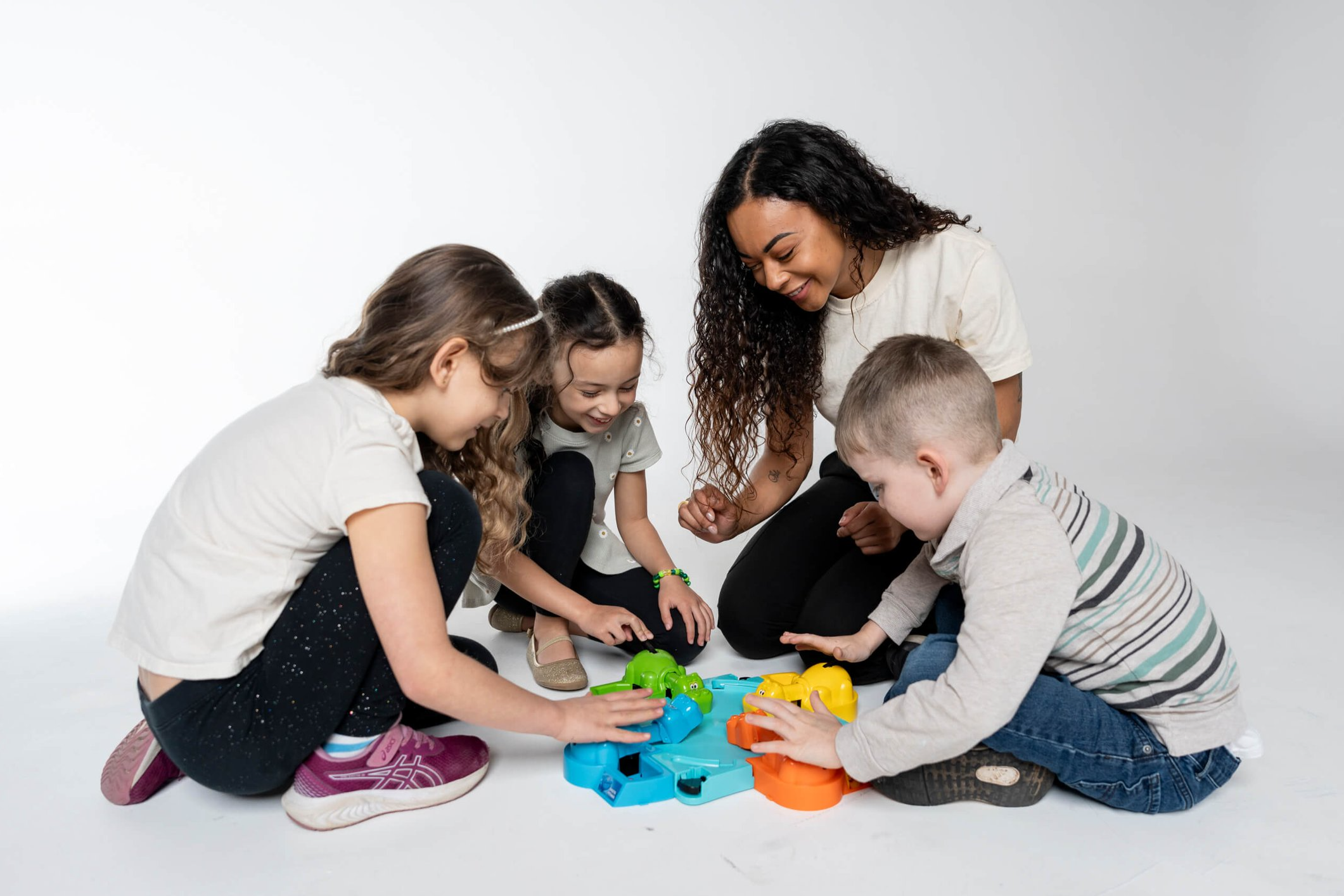
Board Games – Turn-taking, following rules, and asking/answering questions.
Building Activities – Describing, requesting, and sequencing while creating.
Storytelling with Toys – Using dolls or figurines to create narratives.
Each of these activities supports communication goals while keeping therapy fun and engaging.
Why Play-Based Therapy Works
Children learn best when they’re engaged. By using play, therapists can meet kids where they are developmentally and emotionally. This approach is also trauma-informed and neurodiversity-affirming, ensuring children feel safe, respected, and empowered to learn in their own way.
How Parents Can Support Play-Based Speech Development at Home
Follow your child’s lead in play.
Add words and descriptions to what they’re doing.
Ask open-ended questions (“What happens next?”).
Join pretend play and model conversation.
Celebrate communication attempts, not just perfect speech.
Play is the language of childhood. With play-based speech therapy for kids, children learn to express themselves, build relationships, and gain confidence—all while having fun.
👉 Looking for child-centered speech therapy that makes learning fun? Contact Devann Lowe MS CCC-SLP to learn more about play-based, trauma-informed services designed to help kids thrive.
FAQs
-
Play-based speech therapy uses fun, engaging activities like pretend play, board games, and storytelling to teach speech and language skills naturally.
-
Play keeps children motivated and relaxed, making it easier to practice communication skills in real-life, meaningful contexts.
-
Yes! Research shows children learn best through play, and this approach supports both language growth and social-emotional development.
-
Absolutely! Joining in pretend play, modeling language, and celebrating small communication successes all strengthen speech development.